
Maximum load rating
WARNING 
Do not overload the tires by exceeding the
specified load limit as indicated on the Tire
and Loading Information placard on the
driver's door B-pillar. Overloading the tires
can overheat them, possibly causing a
blowout. Overloading the tires can also result
in handling or steering problems, or brake
failure.
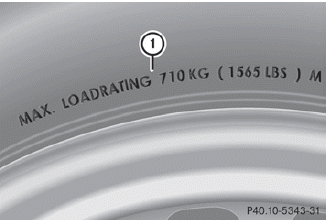
 The actual values for tires are specific to
each vehicle and may deviate from the
values in the illustration.
The actual values for tires are specific to
each vehicle and may deviate from the
values in the illustration.
Maximum tire load 1 is the maximum permitted weight for which the tire is approved.
Further information on tire loads.
See also:
Adjusting the angle of the head restraints
WARNING
Vehicles with Rear Seat Entertainment
System: When adjusting the head restraint,
make sure your fingers do not become caught between the head restraint cushion
and the monitor ...
Changing the set speed
When DSR is activated, the set speed can be
changed to a value between 1 mph and
10 mph (Canada: between 2 km/h and
18 km/h) during the journey.
– To increase or decrease the set speed
in 1 ...
Rear axle level control
The vehicle automatically sets the vehicle
level at the rear axle. Rear axle level control
ensures the best possible suspension and
that the ground clearance remains constant
even when the veh ...