
Maximum load rating
WARNING
Do not overload the tires by exceeding the
specified load limit as indicated on the Tire
and Loading Information placard on the
driver's door B-pillar. Overloading the tires
can overheat them, possibly causing a
blowout. Overloading the tires can also result
in handling or steering problems, or brake
failure.
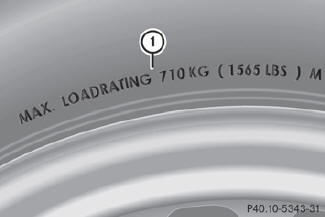
 The actual values for tires are
specific to
each vehicle and may deviate from the
values in the illustration.
The actual values for tires are
specific to
each vehicle and may deviate from the
values in the illustration.
Maximum tire load 1 is the maximum permitted weight for which the tire is approved.
Further information on tire loads.
See also:
Styling
Riding lower than a crossover but looking sleeker than a minivan, the R-Class
might best be described as a large wagon. It's nearly as long as Mercedes'
flagship S-Class full-size sedan, but wider ...
NECK-PRO luxury head restraints
If you have difficulty resetting
the NECK-PRO
luxury head restraints, have this work
carried out at a qualified specialist
workshop, e.g. an authorized Mercedes-
Benz Center.
Remove res ...
Cleaning the seat covers
Do not use microfiber cloths to
clean
genuine leather, artificial leather or
Alcantara® covers. If used often, these can
damage the cover.
Observe the following when
cleaning:
• clean ge ...